36th Tango Community meeting at MAXIV in Lund (Sweden)
MAX III Conference room
Max IV Laboratory
After 2 years of virtual meeting the 36th Tango Community meeting was hosted as an hybrid meeting by MAX IV Laboratory the 29-30 June 2022.
The remote attendance is free of charge, although registration is recommended. Joining in presence requires the registration and the payment of the fee. Please go to the following link for payment after registration: https://luccp.adm.lu.se/en/36th-tango-community-meeting.html
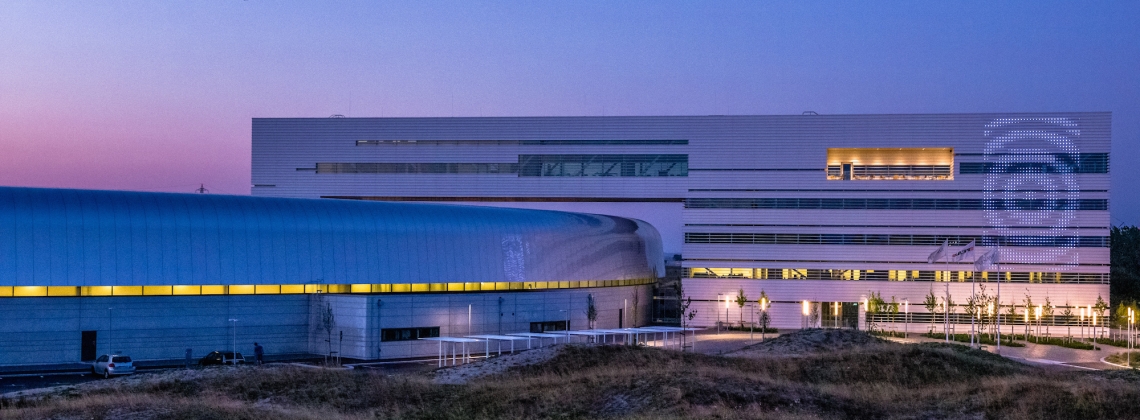
The venue was located at the MAX IV facility, in the beautiful university city of Lund, Sweden.
-
-
12:00
→
13:00
Socializing lunch 1h
- 13:00 → 13:10
-
13:15
→
15:15
Afternoon: Project statusConvener: Nicolas Leclercq (ESRF)
-
13:15
SKA Observatory project update 30m
An update about the SKA Observatory project with a focus on the control system development activities.
Speaker: Marco Bartolini (SKAO) -
13:45
Automation of experiments on the SOLARIS beamlines with the Tango ecosystem 30m
One of our goals in building Control Systems software is to help and facilitate the work of users, beamline managers and operators. Recently, we have conducted a number of internal talks and developed several projects to automate and improve daily work and experiments on the beamlines. During this speech, we will present the most important of them and plans for further improvements.
Speaker: Mr Michal Piekarski (SOLARIS) -
14:15
Taranta: project status and community 30m
During the talk, after a brief Taranta presentation, we will show a demo of the latest developments, the project status, the use cases identified, and the future plan. Regarding the community, we will show how to contribute to the project and the outcome of the first f2f Taranta meeting.
Speakers: Matteo Canzari (INAF - OAAb), Yimeng Li -
14:45
S2Innovation in the Tango Community 30m
S2Innovation is happy to collaborate with institutes and companies within Tango Community. The company is involved also in Tango Kernel maintenance and development
The presentation will show the status of the company, projects it is involved in and plans for the future.Speaker: Piotr Goryl (S2Innovation Sp. z o.o.)
-
13:15
-
15:15
→
15:45
Coffe break 30m
-
15:45
→
18:15
Afternoon: Kernel newsConvener: Lorenzo Pivetta (ELETTRA Sincrotrone Trieste)
-
15:45
Tango C++ Library News 30m
This talk will give fresh news from the cppTango (Tango C++ Library) development team.
The new release cycle will be presented as well as the main features and bug fixes which will be part of cppTango 9.4.0.
Changes impacting users in this coming version will be shown too.
Finally some news from the Tango Source Distribution and the Windows installer will be given.Speakers: Reynald Bourtembourg (ESRF), Thomas Braun (byte physics), Thomas Juerges (SKAO) -
16:15
PyTango Status Report 30m
Latest news from the PyTango project.
Speaker: Anton Joubert (MAX IV Laboratory) -
16:45
Report from the RFC Workshop in Krakow 30m
The RFC workshop in Krakow will be held a week before the meeting. It is worth reporting.
Speaker: Piotr Goryl (S2Innovation Sp. z o.o.) -
17:15
Deploying Tango Device Servers with Ansible 15m
MAX IV has been using Ansible to deploy and configure the control system for a long time, but software and tango device configuration weren't really linked together.
We developed a new Ansible role specifically to deploy Tango device servers.
This role allows us to define together the packages to install and the server/devices configuration. Servers can thus be restarted automatically when a new software version is deployed.Speaker: Benjamin Bertrand (MAX IV Laboratory) -
17:30
New dawn: Tango Controls on macOS 15m
Our venerable Tango Controls is officially available for Linux and Windows OSes. But there exists a third OS, macOS, which has seen a bit of neglect by Tango Controls in the past. It is quite popular among the people in the field of astronomy. Until now developers had to resort on macOS to Docker images, virtual machines and the like. A Tango Controls port for macOS has the potential to lower the entrance threshold on macOS and expand Tango Controls' reach.
In this lightning talk I will demonstrate first working results of our ongoing effort to make Tango Control's cppTango, TangoTest and pytango available on macOS. The repository which contains the build scripts for macOS is already available at https://gitlab.com/tjuerges/build_tango.git.
Speaker: Thomas Juerges (SKAO) -
17:45
Developing and compiling tango with conda 15m
Conda is a popular package manager that can quickly install binary packages and their dependencies.
Many Tango packages are now available on conda-forge and this is an easy way to start working with Tango.What many people don't know or don't think about is that conda can also be used to setup a development environment to compile code.
This talk will show how to compile in a conda environment cppTango, or other C++ softwares like TangoDatabase and TangoTest, for development and test purpose.Speaker: Benjamin Bertrand (MAX IV Laboratory) -
18:00
3rd party systems seamless integration with Tango via Tango virtual host and dynamic server 15m
A showcase of how 3rd party system can be natively integrated into Tango Controls using Tango virtual host and dynamic server with live demo and code examples
Speaker: Igor Khokhriakov (San Diego Supercomputer Center)
-
15:45
-
18:30
→
20:30
Social Dinner 2h
-
12:00
→
13:00
-
-
08:35
→
08:45
Welcome 2 10m
-
08:45
→
10:15
Morning: Tango DevicesConvener: Marco Bartolini (SKAO)
-
08:45
TangoTest and TangoDatabase: State of affairs 15m
I/We will present what has been done and what will be done in the two most famous device servers.
Speaker: Thomas Braun (byte physics) -
09:00
SOLAR pumping unit 15m
At SOLARIS, we mainly use Taurus GUIs to control equipment and check it's statuses. We started to use web applications that replace system dependent GUIs.
Lightning talk about planned integration SOLAR pumping unit with SOLARIS TANGO controls system using Vue.js web GUI.Speakers: Adrianna Pytel (SOLARIS), Wojciech Wantuch (National Synchrotron Radiation Centre SOLARIS) -
09:15
General SISO PID Tango Device for Temperature Control for MaxPEEM 15m
PID controllers are typical devices for process variable regulation which are consolidated in the controls theory field and have a broad area of applications. In MAX IV, it was developed a simple straightforward implementation of a single-input single-output PID controller tango device to allow a direct control of common systems. One of the most important aspects of employing PID controllers, is the correct tuning of its parameters, this is necessary to ensure that the regulated system will work as expected. In this context, here we present an overview of the SISO PID Tango Device implementation based on a time reactive high-level tango device and its application and tuning process for the LEEM2000 temperature control at MaxPEEM beamline.
Speaker: Carla Takahashi (MAX IV) -
09:30
Migration to Python 3 in NSRC SOLARIS 15m
Short update of migration to Python 3 in SOLARIS.
Goals, encountered problems and taken approach.Speaker: Mr Michał Fałowski (NSRC SOLARIS) -
09:45
Device server for Allied Vision Cameras 15m
Introduction: This device server that provides access to the Gig-E cameras manufactured by Allied Vision and is a tool for acquiring images and setting the features.
Method: The first thing to do was to gradually document myself and then use the Vimba Viewer software to operate and test the camera. After that, I created a Python script that allows to adjust the settings we are interested in. That script is used as a library for the device. So, I gradually added specific attributes and set specific states for the device in capture mode and simulation mode.
Result: Key goals such as perfect image acquisition and adjustment of specific parameters have been achieved.
Conclusion: The device "devvimba" is fonctional on testing plateform. It must go through a final testing phase and quality review before it can be used on operational mode.Speaker: Maguette SOW (LULI) -
10:00
Statistics automation in NSRC Solaris 15m
Short presentation about Solaris aproach to gather and process information about machine, such as fails , their duration, mean time between failures etc.
Speaker: Wojciech Zaremba (NSRC Solaris)
-
08:45
-
10:00
→
10:30
Coffee break 30m
-
10:30
→
12:30
Morning: Tango toolsConvener: Mirjam Lindberg (MAX IV)
-
10:30
Sardana Status 30m
Sardana is a software suite built on top of Tango for Supervision, Control and
Data Acquisition in scientific installations. Initially developed at ALBA, it
is now used in several institutions inside the Tango Community.
A brief introduction of the project, together with the current status and
latest developments is presented in this contribution.Speaker: Maria Teresa Nunez Pardo de Vera (DESY) -
11:00
PUMA: a framework for web and native applications based on HTTP/SSE 30m
PUMA is a distributed framework to allow event based communication between multiple fault tolerant and load balanced services and web or native clients.
The communication protocol is based on HTTP and data is exchanged in the JSON format. NGINX offers load balancing and scalability while a supervisor orchestrates recovery operations in case one or more services fail.
On the client side, web applications can be designed using JavaScript and SVG. A designer makes the task easier. cumbia libs offer a module to exchange data with the services so that native C++ / Qt applications can run through HTTP as well as natively upon Tango.Speaker: Giacomo Strangolino (Elettra Sincrotrone Trieste) -
11:30
But where can I just play with it? 15m
Tango Controls is a fantastic framework which allows its users to program almost everything that one would expect from a serious distributed monitor and control system. This comes at a price though. The price is Tango Controls' complexity behind the scenes and shows especially when one wants to set it up for development on one's laptop.
In this lightning talk I will demonstrate the Tango Playground. It is a place where users can develop devices in Python3 in their favourite and known IDE, then run the devices with almost no overhead in a container, find bugs, fix the bugs and start a new iteration in a jiffy. Users can quickly prototype and try out new ideas without having to worry about a VM or a minikube ensemble. All that is needed is a Makefile, a handful of scripts and some additional software in the background. The repository for the Tango Playground is available at https://gitlab.com/tjuerges/tango-playground.git.Speaker: Thomas Juerges (SKAO) -
11:45
"dsconfig", a Tango configuration tool 15m
"dsconfig" is a command line tool which can configure a Tango system "from scratch", or make changes to an existing one. It's based on a JSON file format which is easy to generate. One feature is that the user can check what changes will be made before applying them, so that accidental overwrites or other mistakes can be prevented.
Speaker: Johan Forsberg (MAX IV Laboratory) -
12:00
Grafana on top of the archiver - a quick look 15m
In 2021; ELI-Beamlines introduced a new database called archiver-cache; and exposed it to a Grafana-instance accessible from our office networks; later on adding further data sources (Zabbix, Building Management System,..) and integrating with our operations chat/SMS gateway/..
It's an incredibly popular and enabling tool; exposing over 20k attributes to any operators/scientist/engineers, but also has limitations. This talk will give a quick overview of architecture; and demo it live.Speaker: Birgit Ploetzeneder (ELI Beamlines) -
12:15
HDB ++ Status 15m
HDB ++ Status
Speaker: Sergi Rubio Manrique (ALBA Synchotron)
-
10:30
- 12:15 → 12:30
-
12:30
→
13:30
Lunch 1h
-
08:35
→
08:45